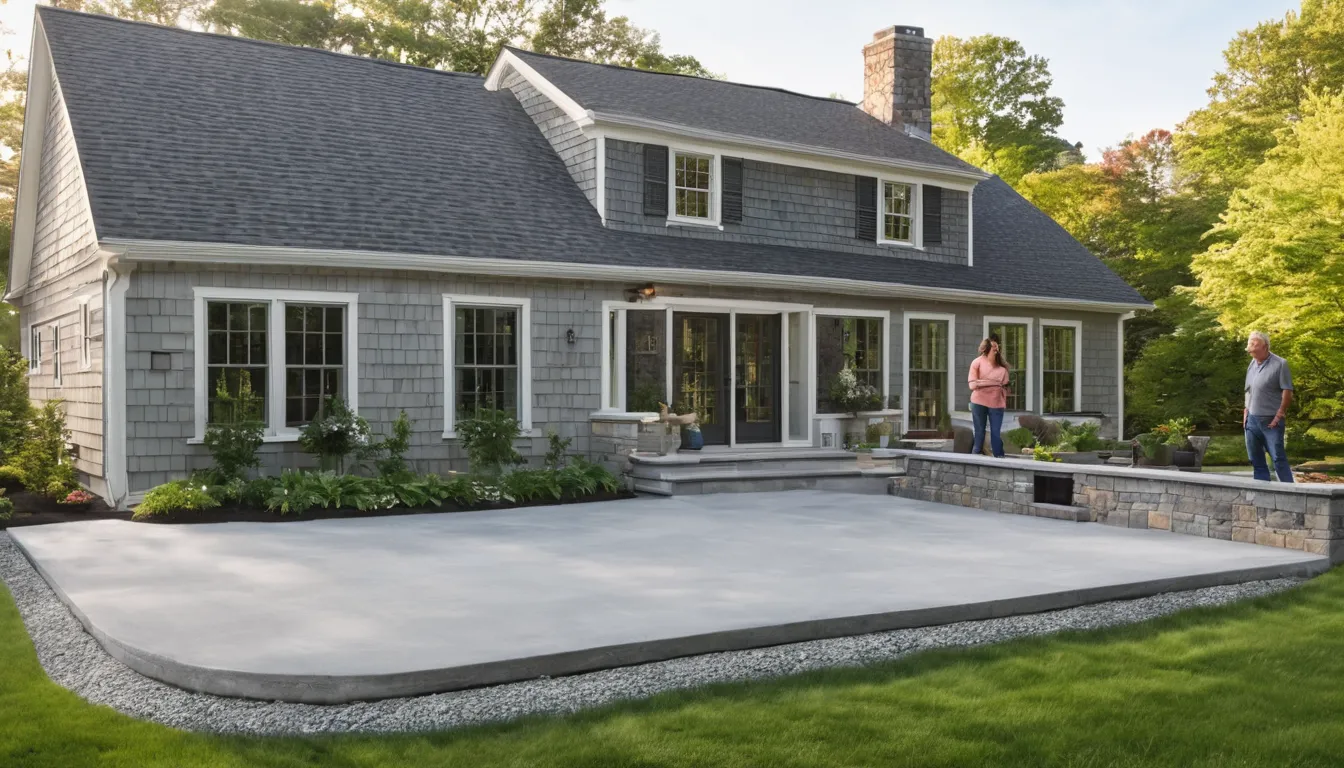
An older house rarely has a simple yard. There may be a cracked slab, a patch from a past repair, or soil that has shifted over the years. A new concrete patio starts with a close look at what is already there.
Sickwoman Concrete is a referral service. It connects homeowners in the West Leechburg area with independent local providers who handle concrete flatwork. The provider inspects the site, explains the plan and puts the quote in writing. This page gives you the steps, the warning signs and the questions to ask first.
Is the Old Patio Tilting Toward the House?
This is the most urgent sign. A slab that slopes toward the wall sends water to the foundation. Rain and snowmelt then collect along the base of the house.
If you see this, plan the new patio sooner rather than later. First, look closely at the gap between the slab and the wall. A gap that keeps growing is worth a provider's visit.
Early Warning Signs to Check This Week
Use this list on a dry day.
- Cracks wider than a pencil line
- Sections that sit higher or lower than their neighbors
- A flaking, sandy or pitted surface
- Puddles that stay for hours after rain
- Old patches that have pulled away
- Gaps where the slab meets steps or siding
Take dated photos. A provider can use them to judge how fast things are changing.
Hidden Surprises Under Old Patios
Check the old slab, then think about what lies below it. Older lots can hold surprises.
- Buried roots and old stumps
- Loose fill left from past work
- Abandoned drain lines
- Soft spots near stone or block foundations
A provider may only find these once the old surface comes up. Ask how extra work would be priced before you sign. Get any change in writing.
Why Homeowners Choose Concrete
Concrete is firm, flat and simple to keep clean. It handles furniture, grills and foot traffic. It can be colored, textured or stamped. On older homes it also replaces brick or pavers that have shifted and tripped people for years.
What a New Patio Project Includes
Most projects follow the same order.
- First: site visit and measurements
- Next: a written quote
- Then: removal of the old slab, if there is one
- Then: grading and a compacted gravel base
- Then: forms and reinforcement such as rebar or mesh
- Finally: pour, finish, joints, curing and sealing
Ask the provider to list each item in the quote.
Sizing Your Patio
Start with how you will use it. A bistro set needs less room than a dining table and a grill.
- Two chairs and a small table: about 10 by 10 feet
- Dining set for six: about 12 by 16 feet
- Dining plus a grill zone: 16 by 20 feet or more
Leave space to pull chairs back. Next, check the distance to windows, basement bulkhead doors and property lines. Cape Cod and multi-family lots are often tight, so measure twice.
Thickness and Base
Most patios are about four inches thick over compacted gravel. In cold climates the base matters, because it lets water drain away. Ask the provider about base depth, reinforcement and where the control joints will go.
Finish Options
Pick the finish by how the space will be used.
- Broom finish: light texture that grips when wet
- Smooth trowel: sleek, but slick in rain
- Exposed aggregate: a pebbled look that hides small marks
- Colored concrete: pigment mixed through the slab
- Stamped pattern: pressed to look like stone, slate or brick
A Note on Stamped Concrete Patios
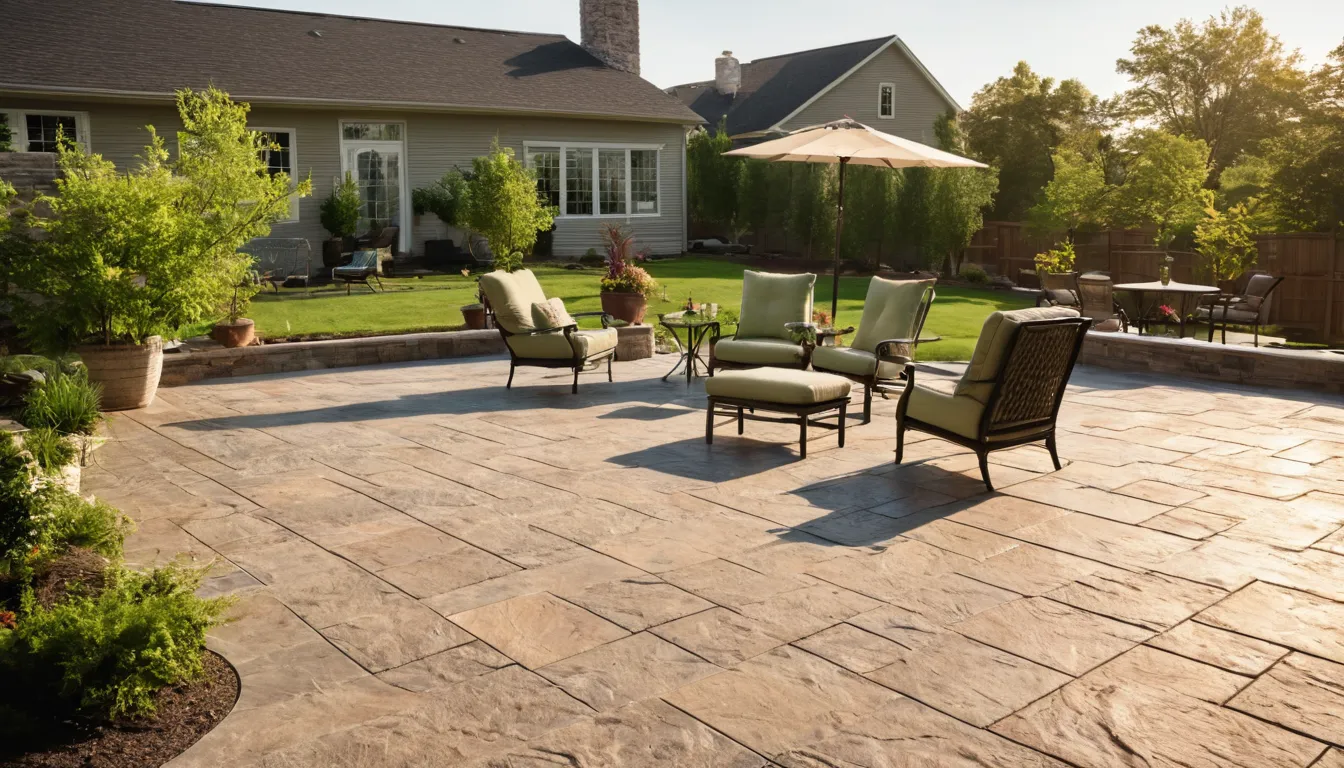
Stamped concrete patios can match the stone or brick on an older house. They need sealer and regular care. Ask how often to reseal and what products the provider uses.
Drainage and Your Foundation
The patio should slope away from the house. A common rule is about one quarter inch per foot. Stone and block foundations can take in water through old mortar joints.
If you already see damp basement walls or crumbling mortar, talk with foundation repair experts before new concrete goes against the wall. Fix the water path first. Then pour.
Winter, Frost and Salt
Cold, snowy winters stress concrete. Water enters tiny pores, turns to ice and expands. Spring snowmelt adds more. Coastal storms can bring salt spray as well.
- Ask about air-entrained concrete
- Ask about sealer
- Use sand, not harsh de-icing salt, in the first winter
Timing the Project
Spring snowmelt shows where water really goes in your yard. Many owners watch it, then book work for when the ground has thawed and temperatures are steady. Warm months fill up quickly. Request a callback to check provider availability.
Choosing a Concrete Provider
Quote in writing. Compare quotes line by line.
- Written scope: size, thickness, base, finish and removal
- A plan for drainage and slope
- Proof of license and insurance where your area requires it
- A clear payment schedule
- A start window with dates
- Photos of past concrete flatwork
Questions to Ask Before You Sign
- What happens if the old slab hides a problem?
- How is the base prepared?
- Where do the control joints go?
- When can I walk on it, and when can I set furniture on it?
Caring for the New Patio
- Follow the provider's curing schedule
- Keep vehicles and heavy loads off
- Seal when advised
- Sweep often and rinse with water
- Shovel with a plastic blade
- Watch for new cracks and take photos
Your Next Step
Measure the space, list the warning signs you saw and send them in with your request. A local provider can then inspect and quote the job.
What's Included
Site Inspection
A provider checks the old slab, slope, soil and access before any numbers go on paper.
Removal and Base Prep
Old concrete or brick comes out, then grading and compacted gravel create a steady base.
Forms and Pour
Forms set the shape, reinforcement goes in, and the concrete is poured and finished.
Joints and Sealing
Control joints guide cracks, and sealer helps protect the surface from weather.
Typical Concrete Patio Price Ranges
These are typical U.S. ranges. Real prices vary by size, access, soil, finish and local rates. Older homes can add removal or drainage work, so always get a written quote.
| Item | Typical range | Notes |
|---|---|---|
| Broom-finish patio, per sq ft | $6 – $12 | Plain gray, standard base |
| Stamped or colored, per sq ft | $12 – $22 | Pattern and color add labor |
| Typical 12 by 16 patio | $1,500 – $4,500 | Depends on finish and site |
| Old slab removal, per sq ft | $2 – $6 | Thicker or reinforced slabs cost more |
| Extra base or grading | $500 – $2,000 | Soft soil or steep slope |
| Sealer, per sq ft | $1 – $3 | Often repeated every few years |
How It Works
Note the Warning Signs
Walk the yard, photograph cracks, tilt, puddles and old patches, and measure the space you want.
Request an Estimate
Send your notes through the form so a local provider can review the project.
Provider Inspects the Site
The provider checks the old slab, drainage and access, then explains the plan.
Compare Written Quotes
Review scope, base, finish and timing line by line, then choose the provider.
Why Call Sickwoman Concrete
Built for Older Homes
Every page starts with aging slabs, past patches and surprises that older yards often hide.
Clear Checklists
Short lists and steps help you spot issues and prepare before anyone visits.
Local Providers
Sickwoman Concrete connects you with independent providers in the West Leechburg area who inspect the site themselves.
Quote Ready
Know what to ask so your written quote covers scope, base, finish and drainage.
Other Services
Need concrete patios in West Leechburg?
Planning new concrete? Send the details through the request form and a local provider from our network can follow up with next steps.
No obligationConcrete Patios FAQ
- How thick should a concrete patio be?
- Most residential patios are about four inches thick over a compacted gravel base. Heavy loads, such as a hot tub, may need more thickness or added reinforcement. Ask the provider to put it in the written quote.
- Can new concrete go over my old patio slab?
- Sometimes, but it depends on the old slab's condition. Cracked, tilted or flaking slabs usually need to come out first. A provider can inspect it and tell you if an overlay is a sound choice.
- When is the right time of year to pour a patio?
- Concrete is usually poured when the ground is thawed and temperatures are steady. In cold climates that often means spring through fall. Providers book up in warm months, so plan ahead and ask about availability.
Reach a local provider
Planning new concrete? Send the details through the request form and a local provider from our network can follow up with next steps.
No obligation